
- Published on
Real-Time Maritime Data Pipelines via Starlink and AWS
- Authors

- Name
- Jim Fellows
- hi@jimfellows.dev
The "Sneakernet" Problem
For decades, getting data off a NOAA research vessel meant one thing: Sneakernet. Scientists would copy files to thumb drives, walk them off the ship at the end of a leg, and drive them to the science center. Data latency was measured in weeks.
With the installation of Starlink on our fleet, we suddenly had a pipe to the internet. But we needed a secure, reliable way to move gigabytes of sensor and biological data from the ship's local network to the cloud.
Enter "The Data Tender"
I developed The Data Tender, a desktop application designed to run on ruggedized Dell Latitude laptops on the ship's bridge.
Tech Stack:
- Language: Python 3.10
- GUI Framework: PySide6 (Qt for Python) + QML.
- Hardware: Ruggedized Windows Laptops.
We chose PySide6/QML over a web stack (React/Electron) to leverage our team's existing Python expertise and ensure tight system integration for network management.
Key Features
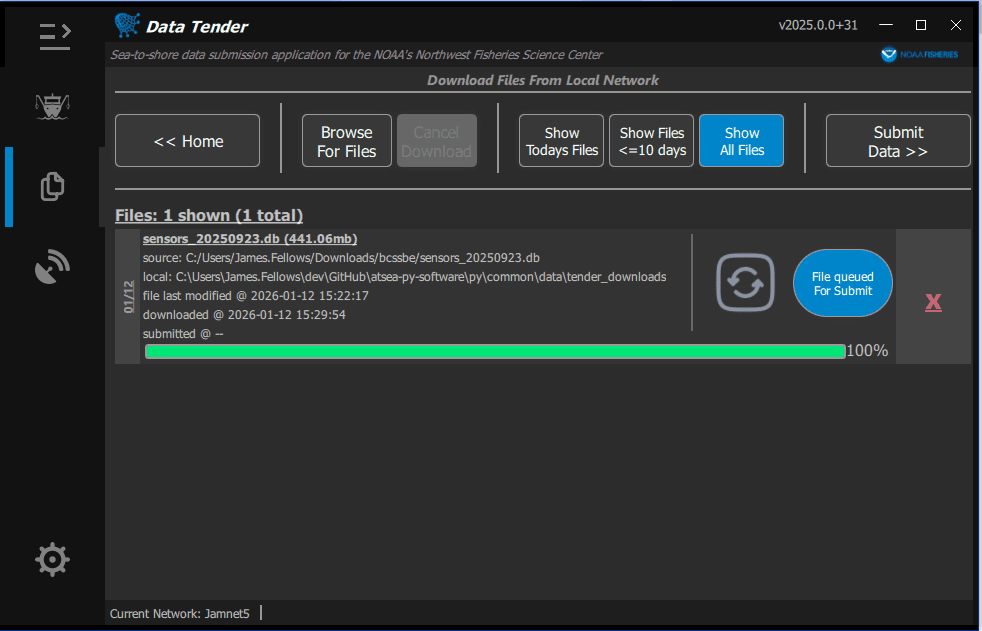
- Network Integration: The app scrapes the local ship network to find fresh survey data files.
- Starlink Connection: It manages the connection to the Starlink WiFi, ensuring we don't accidentally try to upload terabytes over a metered cellular backup.
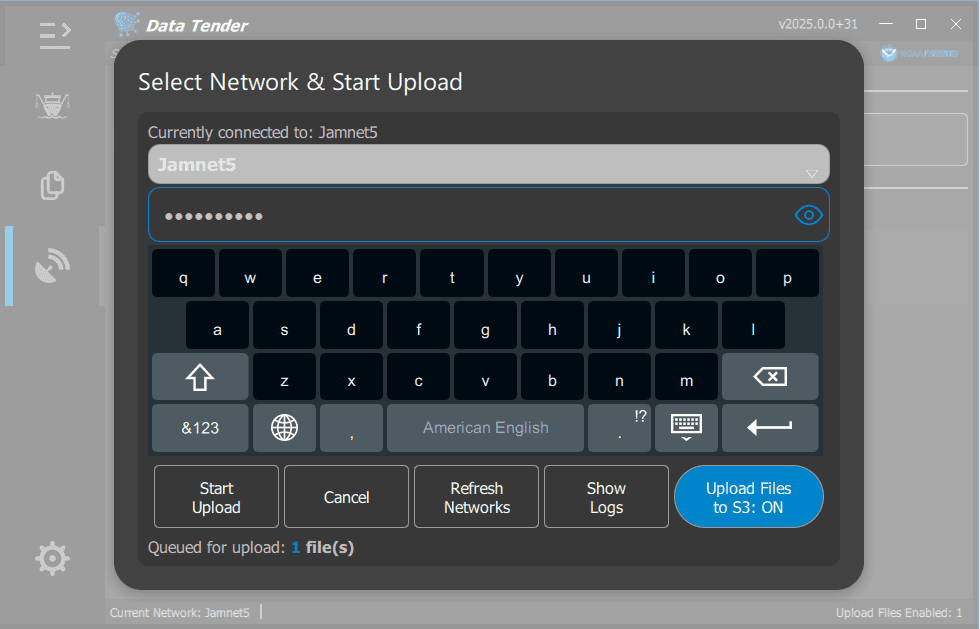
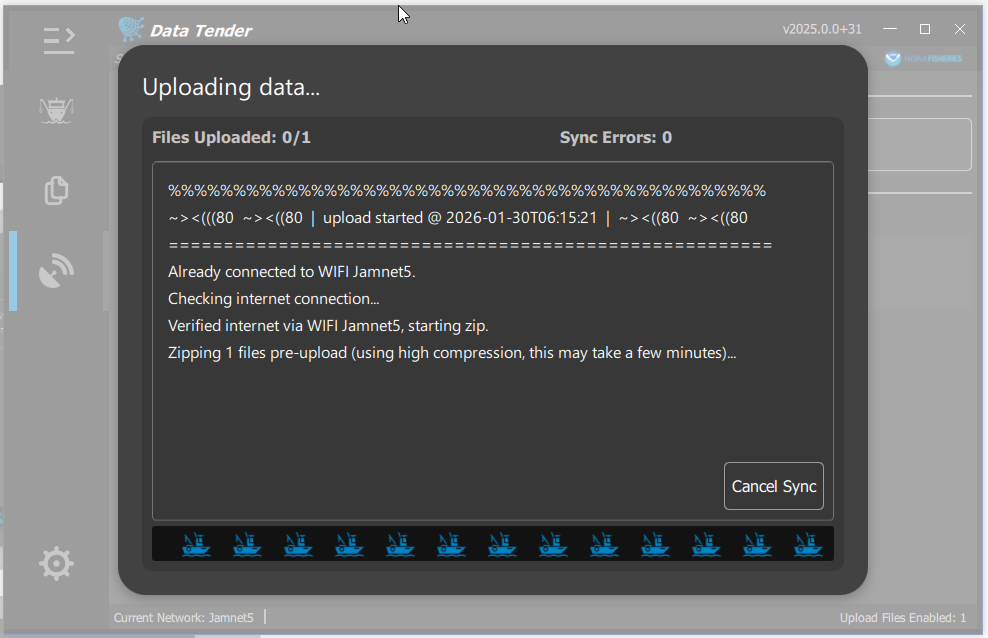
- Automated Uploads: Users can queue files for upload. The app handles compression (zipping) and resumable uploads to AWS S3.
The Cloud Pipeline
Getting data to S3 is just the first step. We built a serverless pipeline to ingest that data into our shoreside databases.
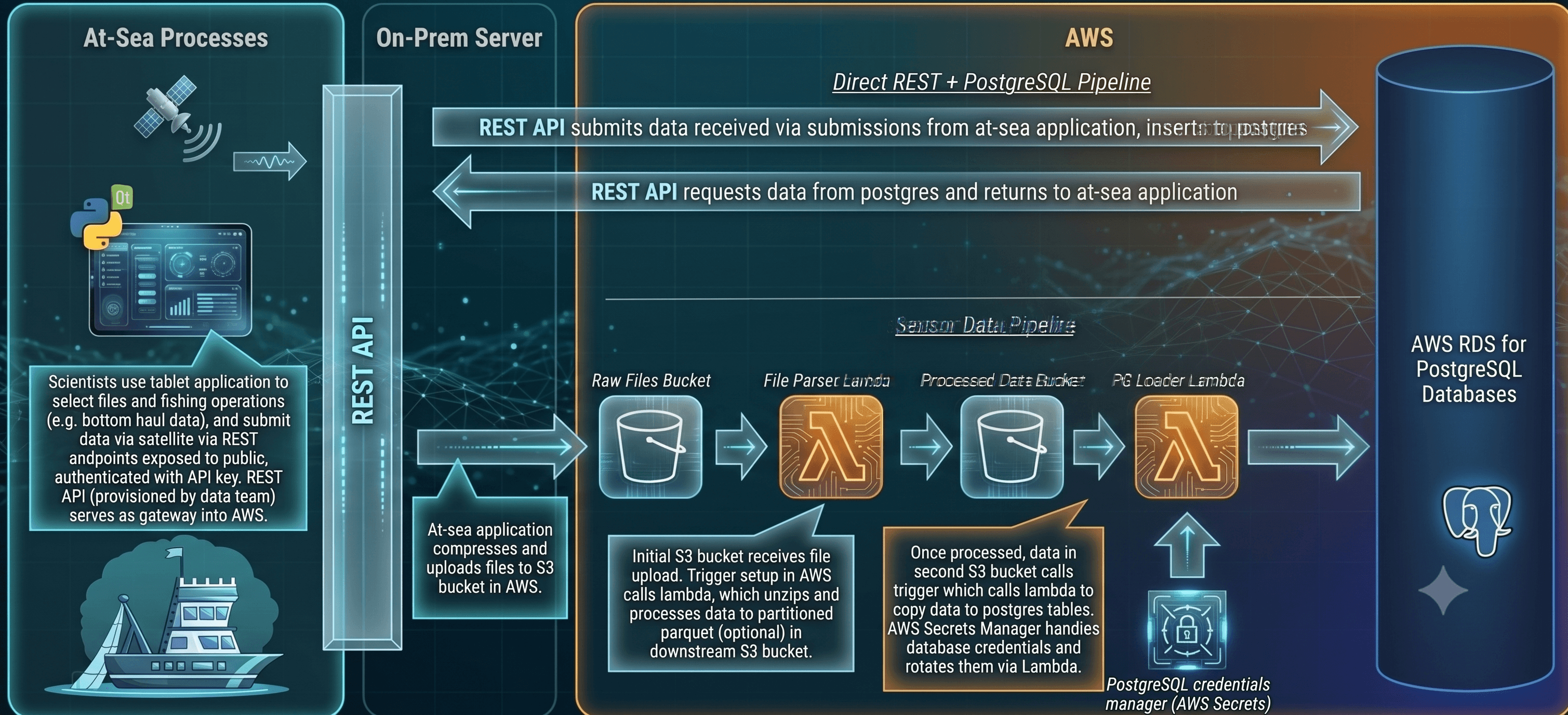
- Ingest: Application uploads zipped data to an S3
Raw Files Bucket. - Trigger: An S3 Event Notification triggers an AWS Lambda.
- Process: The Lambda unzips the payload, parses the data, and moves it to a
Processed Bucket. - Load: A second Lambda loads the clean data into Amazon RDS (PostgreSQL).
Impact
The "Data Tender" transformed our workflow.
- Latency: Reduced from ~2 weeks to ~15 minutes.
- QC: Shoreside scientists can likely check data quality while the ship is still at sea, allowing for immediate corrections.
- Automation: No more lost thumb drives or manual copy-paste errors.
While we are considering a migration to a React/Typescript stack in the future to align with our web apps, the PySide6 implementation proved that a robust, offline-first desktop app is still a powerful tool for field operations.